Hugo Becker · 2 November 2026
Rising Numbers of Protected Species Prompt New Approaches to Teaching Biology Across Heideora
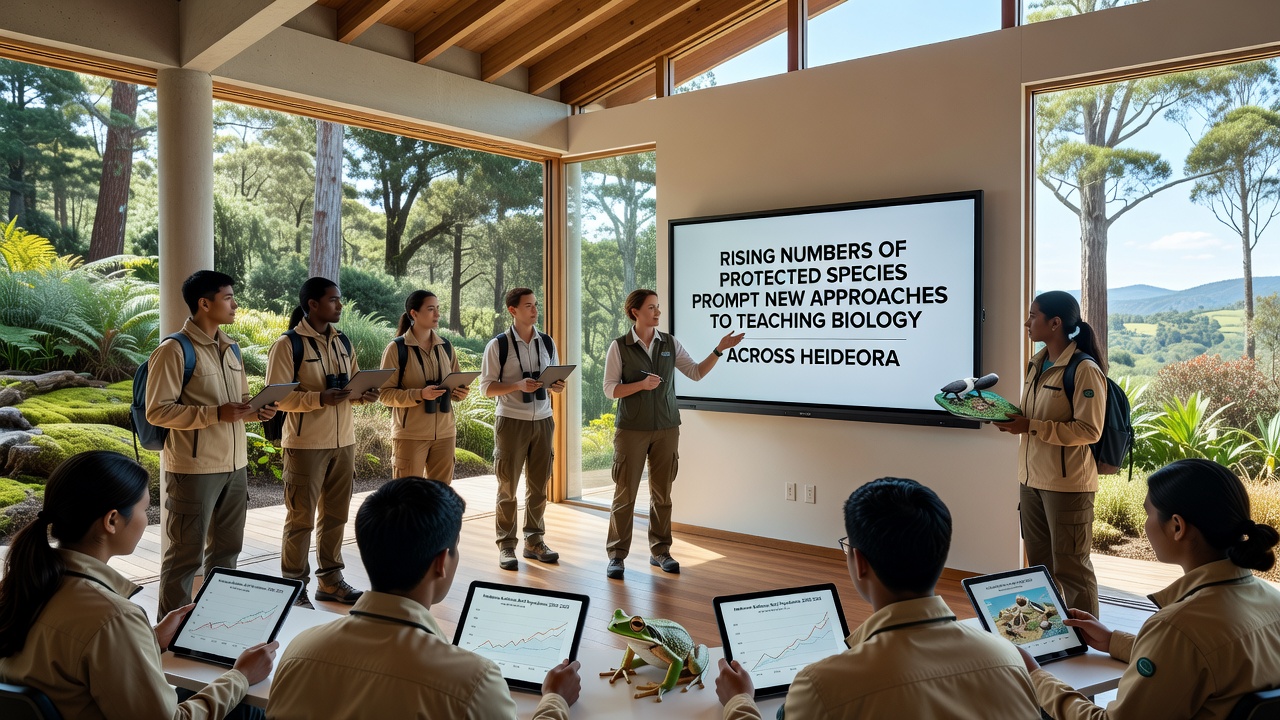
Numbers of protected species in Heideora have climbed steadily over the past decade, and education authorities have responded by reshaping biology curricula in schools and universities throughout the region. Data collected through November 2026 shows increases in bird, amphibian, and plant populations listed under regional conservation agreements, which has forced instructors to move beyond textbook examples toward hands-on monitoring and habitat analysis. Teachers now integrate real-time field observations into lessons, while administrators adjust schedules to accommodate seasonal surveys that align with breeding cycles and migration patterns.
Documented Increases in Protected Populations
Regional monitoring programs recorded a 28 percent rise in sightings of several amphibian species between 2021 and 2026, according to figures released by the European Environment Agency. Similar gains appeared among wetland birds and endemic orchids, prompting local councils to expand protected zones around river corridors and forest edges. These changes coincided with stricter land-use rules that limited development near breeding sites, and the resulting stability allowed populations to rebound faster than earlier models predicted.
Schools located near newly designated reserves began receiving requests for student volunteers to assist with basic data collection. Educators coordinated with wildlife officers to design protocols that let classes record water quality, vegetation cover, and species counts without disturbing sensitive areas. By late 2026, more than forty secondary institutions had incorporated these protocols into their standard biology units.
Shifts in Classroom and Field Methods
Traditional lectures on classification and anatomy still occupy part of the syllabus, yet instructors now allocate larger blocks of time to practical sessions that mirror professional conservation work. Students learn to operate camera traps, map territories with GPS units, and analyze population trends using open-source software. The approach draws on methods developed by researchers at the University of British Columbia, where similar species-recovery projects have been studied since the early 2010s.
One program pairs classes with local rangers for monthly site visits. Participants document changes in habitat structure and note any signs of invasive species that could threaten recent gains. Lessons emphasize data accuracy and ethical handling, skills that align with employment pathways in environmental management. Administrators report that participation rates in optional field modules have risen each term since the curriculum updates began.
Resource Allocation and Teacher Training
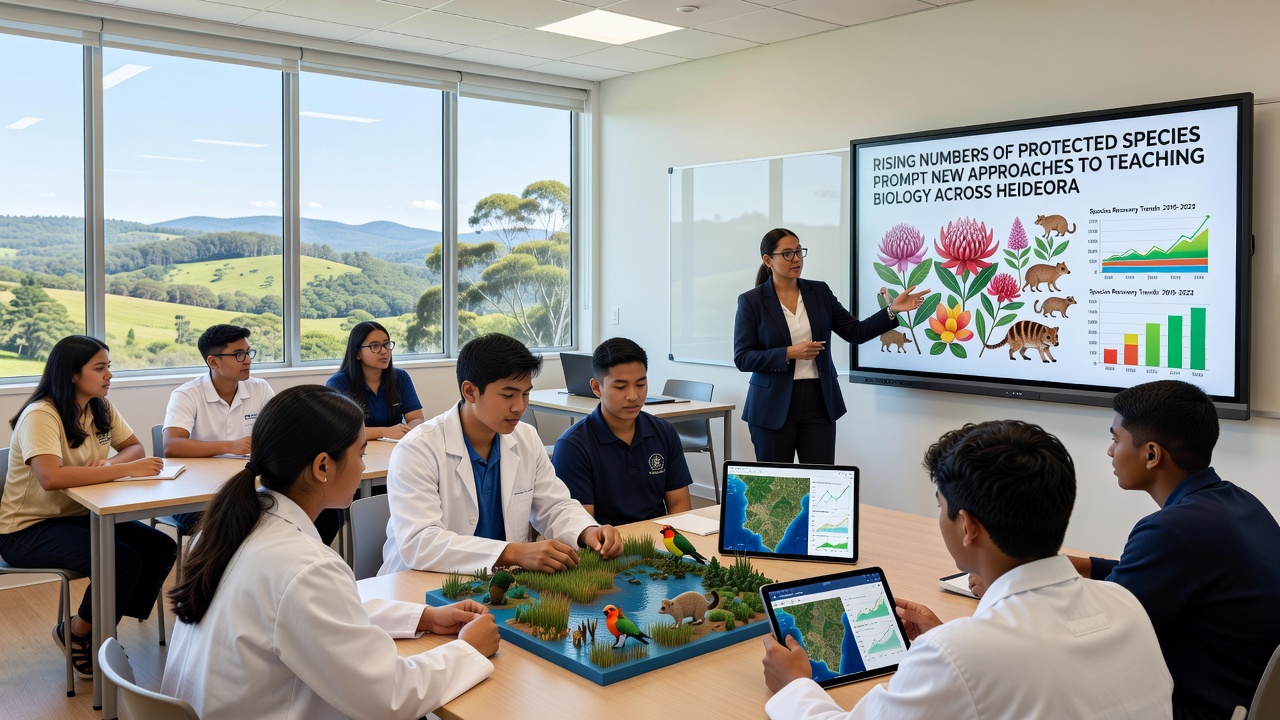
Education departments have redirected portions of their annual budgets toward equipment purchases and professional development. Workshops held in November 2026 trained over two hundred instructors on updated identification guides and digital recording platforms. Sessions covered legal requirements for working inside protected zones and introduced standardized reporting templates used by multiple agencies. Funding also supported the creation of shared databases where schools upload anonymized observations, allowing patterns to emerge across wider geographic areas.
Textbook publishers have begun revising editions to include case studies drawn from Heideora reserves. Chapters now feature maps of current protected corridors and statistics on species recovery rates. Publishers coordinate with regional authorities to ensure content remains current, and several titles incorporate QR codes that link students directly to live monitoring dashboards.
Community and Institutional Partnerships
Local conservation groups supply guest speakers and occasional equipment loans, while universities offer credit-bearing placements for advanced students. These arrangements reduce costs for smaller schools and expose learners to career options in research and policy. A pilot exchange with programs in Australia has let selected classes compare recovery data from comparable temperate ecosystems, highlighting differences in climate influence and land-management history.
Assessment practices have evolved alongside the content. Rather than relying solely on written exams, teachers evaluate portfolios that combine field notes, statistical summaries, and reflective essays. External examiners from the Canadian Wildlife Service have reviewed sample portfolios to ensure consistency with international standards. Results from the first cohort indicate stronger retention of ecological concepts compared with earlier cohorts taught under the previous framework.
Conclusion
The rise in protected species has therefore required biology education in Heideora to emphasize direct observation, data management, and inter-agency collaboration. Programs continue to expand as new monitoring sites come online, and curriculum developers track outcomes through longitudinal studies that began in 2024. Continued investment in training and equipment will determine how widely these methods spread to additional districts in the coming years.